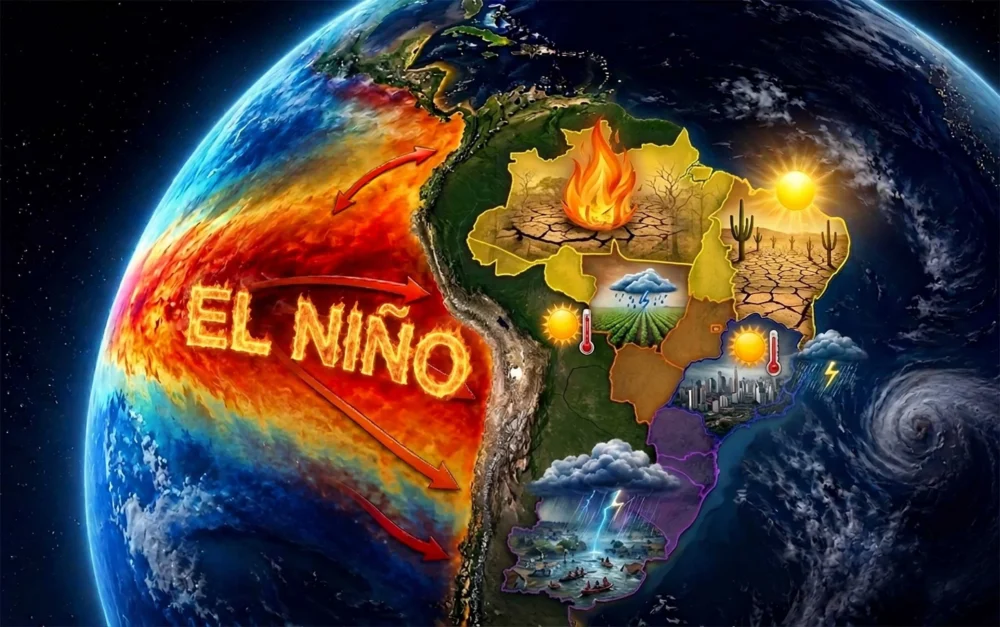
📸 Créditos da imagem: criada por inteligência artificial: Grok/Olhar Digital
Impact on Children
El Niño, one of the strongest since 1950, may expose over 30 million Brazilian children and adolescents to multiple climate risks.
Key Risks
- Health: heat, humidity changes, increased dehydration risk, mosquito proliferation.
- Food: crop losses, income reduction, price hikes, food insecurity.
- Water: droughts reduce safe water, floods contaminate sources, damage sanitation.
- Education: smoke, heat, water shortages, infrastructure damage disrupt schooling.
- Protection & Income: housing loss, job loss, reduced ability to meet basic needs.
Service Interdependencies
Deficiencies in one service can cascade to others, e. g., lack of water hampers health and education, school closures affect health outreach.
Case Studies
In 2024, floods in Rio Grande do Sul affected 741,000 students; simultaneous Amazon drought impacted 436,000, totaling 1.17 million students with halted classes.
Recommendations
- Strengthen early warning systems.
- Prepare health facilities for climate events.
- Revise school emergency plans.
- Protect water sources.
- Identify vulnerable families and communities early.
The UNICEF protocol links civil defense, health, social assistance, education, and human rights to mitigate risks.
Influencers and youth are mobilized to spread information and foster climate preparedness for children.
📰 Leia a notícia completa em: Olhar Digital »